
Remote meter reading and consumption reporting
Bring connected heat, water, and energy meter readings into one workspace. Review consumption history and export readings for reports and billing calculations.
Metering data, equipment monitoring, and remote control in one service. Designed to complement your existing system.
1 active alarm · 1 source to review
Contact age shown; reading freshness is not assessed.Readings and trends
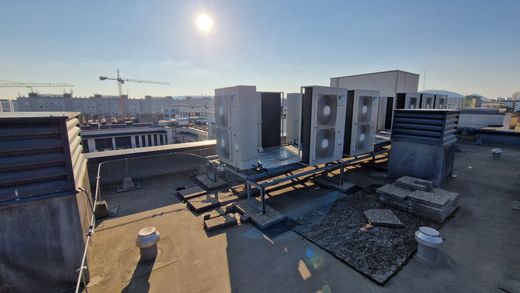
At a 52-apartment residential pilot, the operator checked hot-water temperatures and adjusted heat-pump operation in under 30 minutes after a report—without an initial site visit.
Read the pilot story A documented incident at this pilot building.From remote readings to consumption reporting, data for billing calculations, and demand-based control.
Manage connected meters, retrieve readings remotely, and review consumption history.
Understand what triggered an alert using the relevant measurements and history.
Coordinate equipment to match demand, with defined priorities and timing matched to system response.
Bring connected meters into one workspace. Retrieve readings remotely, review consumption over a chosen period, and use the data for operational reports and billing calculations.
17–18 Jun · 24 hours · Consumption since period start (kWh)
| Reading time | Meter reading (kWh) |
|---|---|
| 128,170.4 | |
| 128,456.8 |
Review the measurements and operating history behind a deviation, so your team can decide where to investigate and what to adjust.
Supply temperature is 42.1 °C; the configured lower limit is 48 °C.
Control connected boilers, heat pumps, and chillers to match demand. From individual units to staged plants and mixed heating systems.
Example: heat-pump control
Heating plant · Heat pump 03
Complete assignment settings, saved together.
Monitor and coordinate boilers, heat pumps, chillers, and ventilation equipment. Connect existing systems, from single units to mechanical plants.
Track temperatures, flow rates, and equipment states.
Get notified when configured thresholds are exceeded.
Retrieve and compare past measurements and operating states.
Switch connected equipment and adjust supported operating modes and settings remotely.
Coordinate multiple units according to measured demand, configured conditions, and priorities.
Adjustable delays between capacity stages let the system respond before the next control action.
Record completed work, interventions, and notes in a retrievable history for each unit.
Connect compatible meters, sensors, and controllers.
Residential pilot: 52 apartments, 12 heat pumps.
Read the pilot storyBring connected heat, water, and energy meter readings into one workspace. Review consumption history and export readings for reports and billing calculations.
Review heat-pump temperatures, operating history, and alerts remotely. Coordinate connected equipment with measured heating and hot-water demand.
Plan a building monitoring integration using supported Modbus TCP, M-Bus-to-Modbus bridges, I/O, and HTTP readings through a local gateway.
We assess your existing interfaces and define the supported connections before installation. Compatible meters and equipment remain in place.
Review meters, equipment, communication paths, and the operational problem.
Agree gateway installation, access, supported readings, and responsibilities before rollout.
Start with monitoring. Add reporting or control only where the connections and scope support it.
The pilot uses Modbus TCP, M-Bus-to-Modbus bridges, and Modbus I/O. HTTP APIs can supply virtual readings. Compatibility depends on the device interfaces and available registers.
A local gateway connects the building equipment to the platform. The required hardware, network access, and installation responsibilities are agreed for each project.
Yes. Remote reading and monitoring can be scoped independently. Control requires suitable connected equipment and an explicitly agreed configuration.
We define the building, sources, access, installation work, and intended outcome together. Timing, pricing, and support are agreed for that scope.
Discuss your existing meters, technical systems, and monitoring challenges. We’ll explore suitability and a possible next step. No preparation required.